𝐂𝐎𝐌𝐏𝐑𝐄𝐇𝐄𝐍𝐒𝐈𝐕𝐄 𝐏𝐑𝐎𝐓𝐄𝐂𝐓𝐈𝐎𝐍 𝐎𝐅 𝐂𝐈𝐕𝐈𝐋𝐈𝐀𝐍𝐒 (𝐂𝐏𝐎𝐂)

The current Peace Support/Keeping Operation (PSO/PKO) setting has become increasingly dynamic and complex with civilians bearing the greatest brunt. Due to this, Protection of Civilians (POC) has taken center stage as a prominent mandate and, more often than not, is used to measure success of peace operation.
Protection of civilians in definition is “Without prejudice to the primary responsibility of the host state, integrated and coordinated activities by all civilians and uniformed mission components to prevent, deter or respond to threats of physical violence against civilians within the mission’s capabilities and areas of deployment through the use of necessary means up to and including deadly force.”

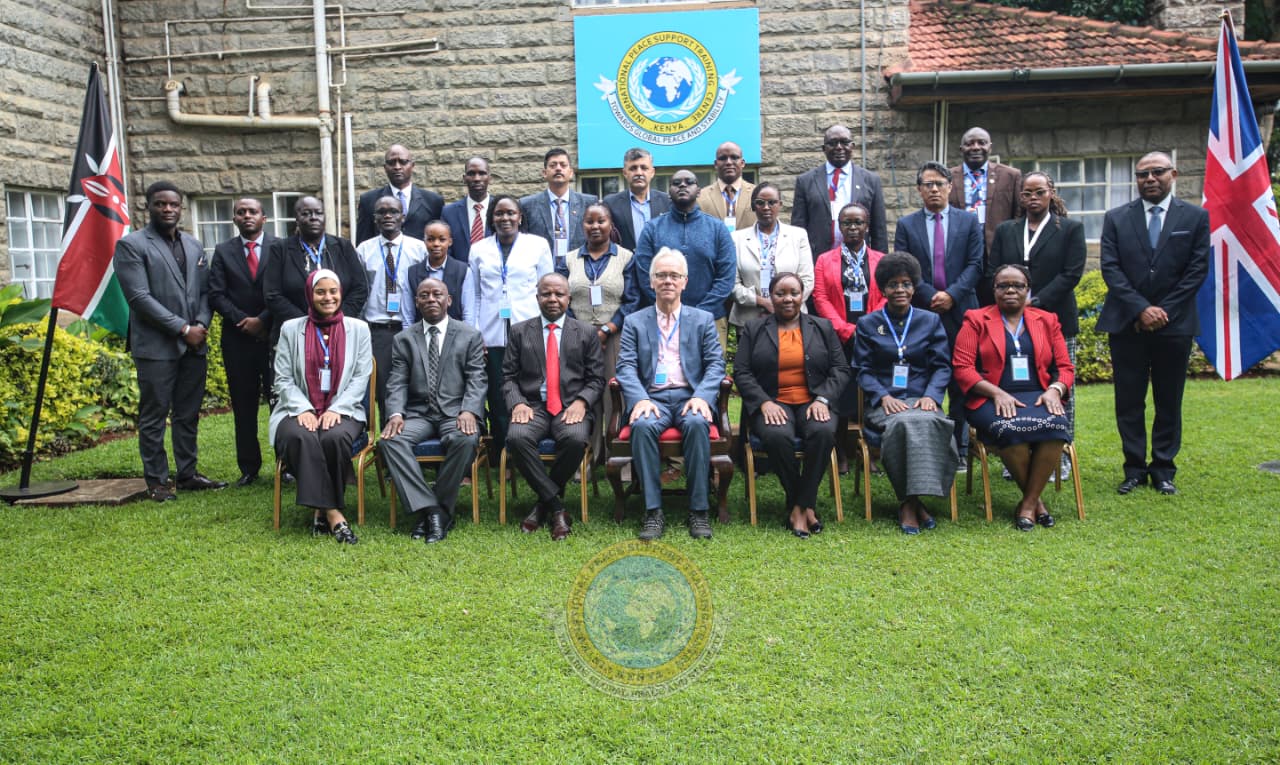
The Comprehensive Protection of Civilians Course (CPOC), co-sponsored by the Republic of Slovenia through Peace Operations Training Centre (Slovenia) and the United Kingdom through the British Peace Support Team Africa, aims to enhance participant’s understanding of POC intricacies and frameworks and, consequently, contribute towards operational effectiveness of African Standby Force.
The course brings together 30 participants from the Military, Police, and Civilian components, representing 19 countries: Argentina, Bangladesh, Botswana, Burundi, Côte d’Ivoire, Djibouti, The Gambia, Ghana, Indonesia, Jordan, Kenya, Malawi, Nigeria, Pakistan, Paraguay, Uganda, Somalia, Sri Lanka, and Zambia.

At the end of the course, the participants will understand POC Concepts, principles and mission components’ tasks with special attention to Conflict Related Sexual Violence (CRSV) and child protection within the context of PSO/PKO.
And when in doubt whether someone is a civilian, they are!


 Bringing together participants from Sierra Leone, Ghana, Namibia, the Democratic Republic of Congo (DRC), Kenya, Morocco, Tunisia, Somalia, Tanzania, and South Africa, the two-week course fosters regional cooperation and peer learning among women practitioners. Through intensive hands-on training, practical exercises, and structured knowledge exchange, participants enhance their technical expertise while building strong professional networks that extend beyond national borders.
 The event, graced by the Austrian Ambassador to Kenya, H.E Christian Fellner, highlights the Government of Austria’s continued commitment to advancing gender equality, capacity building, and sustainable peace and security initiatives in the region. His engagement underscores the importance of investing in women as key actors in technical and security-related fields.
 The course represents a significant step toward building safer, more resilient, and inclusive communities. By empowering women as ammunition technical experts, the initiative not only addresses critical security needs but also reinforces the essential role of women in shaping sustainable peace and security outcomes across the region.